Mexico’s National Security Law Proposal Prompts Human Rights Concerns

April 28, 2011 7:30 am 0 comments

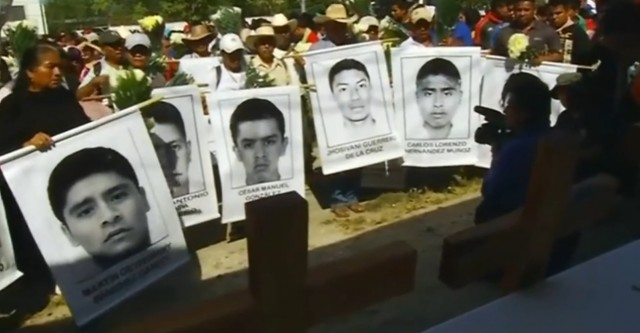
Protester holding a sign that says "Enough, no more blood". Photo by Jesús Villaseca Pérez.

As the deadline nears for the Mexican Congress to approve controversial changes to the country’s National Security Law, Mexican human rights advocates are rallying against revisions that they say could pave the way to a police state.

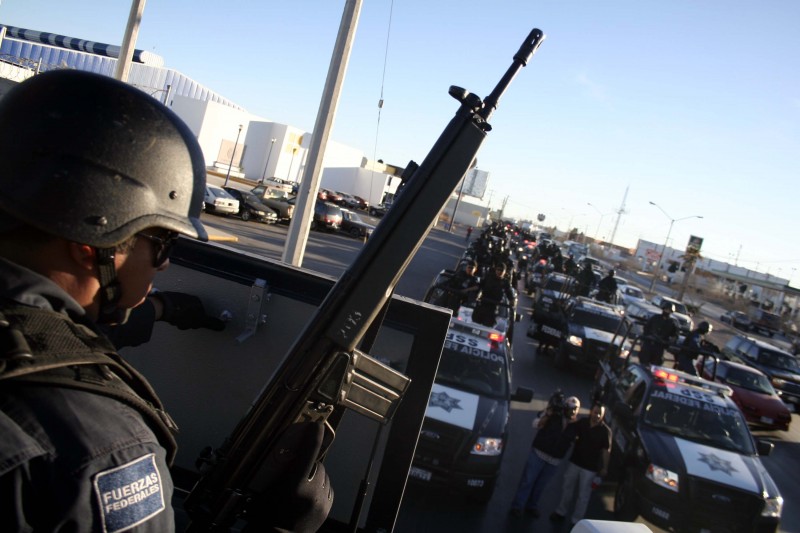
The proposed changes to the National Security Law, submitted by President Felipe Calderón in 2009 and approved by the Mexican Senate last year, set forth the procedures for military involvement in Mexico’s internal security. The changes would allow the President and the National Security Council to deploy the Armed Forces against internal threats to Mexican national security and to use surveillance for intelligence-gathering purposes.

Opponents to the changes have raised concerns that neither citizens nor Congress will have any say on how and when military force is used. On Tuesday, four Mexican social activists entered the House of Deputies to personally debate the proposed changes to the National Security Law with legislators.

“Look over the changes twenty times, because they violate human rights,” said Eduardo Gallo, ex-president of Mexico United Against Crime (MUCD), who along with priest Alejandro Solalinde, activist Julián Le Barón, and writer Javier Sicilia, spoke at the meeting of deputies gathered to debate the law.

“We disagree that the Executive branch can create a state of exception with none of the other powers of the Union participating whatsoever”, said Gallo, “Just as we disagree with detentions, searches without a judicial order, or in intervening in communication.”

Both Le Barón and Sicilia, who joined Gallo, have lost family members in the violence surrounding Mexico’s drug wars, in which approximately 40,000 Mexicans have been killed since 2006. But deputies from the PRI and PAN parties say that revisions to the National Security Law will help regulate and clarify the role of the Armed Forces in Mexico’s internal affairs. “There is no effect to human rights in any way, which is one of our priorities,” said the PRI’s Francisco Rojas Gutiérrez.

Nonetheless, dozens of Mexican organizations have set up online petitions and open letters to Mexican lawmakers asking for a public debate on changes to the law. So far, at least 73 organizations from Mexico’s Network of Civil Human Rights Organizations have signed on.

José Martínez Cruz, a spokesperson for the Independent Commission of Human Rights (CIDH) in the state of Morelos, said his organization has grave concerns about the changes proposed to the National Security Law, which he said could protect members of the Armed Forces from civilian trials while criminalizing the activities of protesters, human rights activists, journalists, and others.

“The human cost has been very high,” said Martínez, referring to the military’s involvement in Mexico’s internal security. “Complaints presented before the National Commission of Human Rights (CNDH) for human rights violations by the military have increased 1000 per cent between 2006 and 2009; 33 per cent of the complaints received in Mexico in 2010 are related to the Secretaría de la Defensa Nacional (Sedena),” he said.

In Congress, Mexican politicians skeptical of changes to the National Security Law continue to criticize the initiative’s broad definition of what activities might constitute a threat to national security and what methods would be used to combat them. The national director of the PRD, Carlos Navarrete, said that the Mexican Senate had approved changes to the National Security Law last year only on the grounds that arbitrary detentions, searches without judicial authorization, and the interception of private communication would not occur. He said that the changes should have the approval of all five commissions charged with reviewing the law. So far, only one, the National Defense commission, has done so.

On Tuesday, the PRD called for emergency sessions of Congress to prevent the proposed changes to the National Security Law from being approved without further discussion. The current session of Congress is set to conclude on Friday.

Photo: Jesús Villaseca Pérez @Flickr.
No Comments

Leave a Reply


Other News

  • Central America Honduras Today in Latin America Kidnapped Honduran Radio Journalist Found Murdered

    Kidnapped Honduran Radio Journalist Found Murdered

    Top Story – Honduran police have arrested a suspect in the murder of kidnapped RHN radio journalist Alfredo Villatoro, whose body was discovered in Tegucigalpa late Tuesday. Villatoro, a prominent Honduran journalist and news director for RHN, was kidnapped early Wednesday on his way to work. His family and colleagues urged Villatoro’s kidnappers to release him unharmed, but he was found shot in the head nearly a week after his disappearance, wearing a police uniform, not the clothing he had on when he was [...]

    Read more →
  • Brazil News Briefs Southern Cone Brazil’s Truth Commission Set To Begin Its Work

    Brazil’s Truth Commission Set To Begin Its Work

    Brazilian President Dilma Rousseff will preside over an official ceremony Wednesday to launch Brazil’s Truth Commission. The seven-member commission will convene for two years to investigate human rights abuses committed in Brazil between 1946-1988, focusing on the country’s 1964-1985 military dictatorship. Rousseff, who endured torture as a political prisoner during the dictatorship, has made it clear that she intends to present the Truth Commission as a multi-partisan effort with broad support in Congress and across social sectors. The commission was created after [...]

    Read more →
  • Andes Colombia Today in Latin America Bombing In Bogotá Kills Two, Injures Dozens More

    Bombing In Bogotá Kills Two, Injures Dozens More

    Top Story –  A driver and a police bodyguard for former Colombian Interior Minister Fernando Londoño were killed after a bomb went off in Bogotá on Tuesday, injuring dozens of other people. Lodoño was traveling through a commercial district when an assailant allegedly threw a bomb at his car, according to security camera footage mentioned by Bogotá Mayor Gustavo Petro. Colombian authorities had discovered another bomb earlier Tuesday, hidden in a car allegedly destined for police headquarters in Bogotá, but they managed [...]

    Read more →
  • Caribbean Cuba Today in Latin America Judge Rejects Declassification Of CIA Volume On Bay of Pigs

    Judge Rejects Declassification Of CIA Volume On Bay of Pigs

    Top Story – A U.S. federal judge rejected an effort by the National Security Archive to declassify the CIA’s fifth and final volume on the history of the U.S. Bay of Pigs invasion of Cuba. The volume, the last in the CIA’s Official History of the Bay of Pigs, was written over three decades ago and details the CIA’s internal investigation of the failed Bay of Pigs operation in April 1961, in which the U.S. unsuccessfully attempted to overthrow Fidel Castro’s government in Cuba. Judge Gladys Kessler [...]

    Read more →
  • Andes Colombia Today in Latin America Colombia: FARC Plans To Release French Journalist

    Colombia: FARC Plans To Release French Journalist

    Top Story — Red Cross officials said Sunday that the Revolutionary Armed Forces of Colombia (FARC) guerrillas have agreed to release French journalist Romeo Langlois, who was captured by the rebels while he was embedded with Colombian troops on April 28. The soldiers were in the process of destroying cocaine laboratories in southern Colombia when they were confronted by the rebels, who reportedly killed four members of the Colombian security forces. The head of the ICRC in Colombia said the Red [...]

    Read more →
  • Chile Southern Cone Today in Latin America Chilean Congress Approves “Zamudio Law” Against Discrimination

    Chilean Congress Approves “Zamudio Law” Against Discrimination

    Top Story – Chile’s Congress passed a long-delayed anti-discrimination law on Wednesday night in a vote of 25-3, seven years after the law was initially introduced and more than two months after 24 year-old gay Chilean Daniel Zamudio was beaten in a violent attack from which he eventually died. Zamudio’s murder prompted thousands of Chileans, including Chilean President Sebastián Piñera, to call for expedited passage of the anti-discrimination law that had been languishing since it was approved by the Senate in [...]

    Read more →
  • Central America Honduras Today in Latin America Honduras: Second Journalist Kidnapped in One Week

    Honduras: Second Journalist Kidnapped in One Week

    Top Story — Honduran radio journalist Angel Alfredo Villatoro was kidnapped Wednesday just a few days after authorities discovered the body of another journalist, Erick Martínez, on the side of a road in eastern Honduras. Witnesses of the kidnapping reported that Villatoro was taken by “young gang members” at dawn on his way to work at HRN radio station in Tegucigalpa. The Honduran government and HRN colleagues have issued statements pleading that Villatoro’s captors release him unharmed. Meanwhile, little information has emerged [...]

    Read more →
  • Caribbean Puerto Rico Today in Latin America Puerto Rico Governor: Students Should Speak Fluent English by 2022

    Puerto Rico Governor: Students Should Speak Fluent English by 2022

    Top Story – Puerto Rican Governor Luis Fortuño has proposed an ambitious plan to make Puerto Ricans bilingual in English and Spanish by the year 2022, an effort that he hopes will pave the way for U.S. statehood. Fortuño wants public schools to teach all classes in English, with the exception of Spanish literature and grammar instruction. English is currently taught from kindergarten through high school, but Education Secretary Edwin Moreno said the government would begin to introduce a new bilingual curriculum  at 31 [...]

    Read more →
  • Andes Colombia Today in Latin America Colombia May Regulate Prostitution Following Scandal

    Colombia May Regulate Prostitution Following Scandal

    Top Story – Colombian politicians have proposed a new bill that would regulate prostitution in Colombia, reacting to the scandal that erupted in Cartagena last month when members of the U.S. Secret Service reportedly hired prostitutes before the Summit of the Americas. Conservative Senator Armando Benedetti proposed the bill on Monday, noting that prostitution would remain legal in Colombia, but that the new law would “guarantee labor rights and public health”. It’s not clear whether the bill would pass, but Colombia’s Catholic church remains [...]

    Read more →
  • Argentina Southern Cone Today in Latin America Argentine Ad For London Olympics Angers IOC

    Argentine Ad For London Olympics Angers IOC

    Top Story – The International Olympic Committee (IOC) sent a letter to the Argentine Olympic committee after an Argentine ad promoting the 2012 London Olympics made a controversial reference the Falkland Islands. The ad, which first aired in Argentina on Wednesday, showed scenes of Argentine field hockey captain Fernando Zylberberg training in the Falkland Islands, followed by the statement, ”To compete on British soil, we train on Argentine soil.” Argentina and Britain recently marked the 30th anniversary of the Falklands War, and both countries still [...]

    Read more →