Dispatches, Mexico
Mexico’s Drug War Refugees Rarely Secure Asylum In United States
August 25, 2011 By Raisa Camargo
EL PASO, Texas – A young police woman in her early 30s volunteered to uphold the law in a society fed by narco-violence, but faced insurmountable opposition. She was forced to abandon her homeland to flee persecution and now her only escape hinges on the uncertainty of the U.S. legal system.
“You have to run away like a rat because you don’t know who to be careful from,” said the woman, who declined to be identified because of threats to her security, earlier this year. “You feel like everyone wants to kill you.”
Her story is one among the 230,000 people who have been displaced from Mexico because of drug war violence, about half of whom are seeking refuge in the United States, according to the Internal Displacement Monitoring Center. These cases are also raising questions about U.S.-Mexican relations, as more than $1.4 billion of U.S. funds are being dispersed through the Merida Initiative to combat drug trafficking in Mexico.
Asylum advocates contend the U.S. government avoids approving Mexican asylum cases for political reasons.
“The U.S. government is reluctant to grant political asylum to Mexican applicants because doing so means recognizing that aid from Washington is financing military abuses against the Mexican civilian population,” said Carlos Spector, an immigration attorney in El Paso, Texas.
In order to receive asylum, the applicant must establish that he or she is unable to return to the country of origin because of persecution or a well-founded fear of persecution based on race, nationality, religion, political opinion or membership in a social group.
More than 3,200 Mexicans filed asylum applications in fiscal year 2010, with 1,671 being withdrawn, and only 49 cases granted — a success rate of just 1.5 percent. In comparison, the U.S. granted asylum last year to 234 out of 563 Colombian applicants (41.6 percent) and 3,795 out of 10,087 Chinese applicants (37.6 percent), according to the Executive Office of Immigration Review.
Nationally, judges denied 86 percent of asylum applications from Mexico between 2008 and 2010, according to the Transactional Records Access Clearinghouse, a non-partisan database that documents U.S federal immigration enforcement.
Retired immigration Judge Bruce Einhorn, who helped draft the Refugee Act of 1980, which governs modern asylum cases, explained that although the law prohibits the federal government from politically interfering with asylum decisions, he doesn’t exclude the existence of diplomatic pressure among U.S. judges.
“There is a real sense in the executive branch of our government that the relationship needs to be as smooth as possible and as a result if you read the State Department’s human rights reports on Mexico, which are part of the evidence that are used by asylum adjudicators, you’ll find that it’s a very delicately frayed description of democracy in Mexico,” said Einhorn. “The problems that affect human rights in Mexico are handled gingerly.”
According to asylum advocates, the courts typically refer to a June 1997 State Department report called “Mexico — Profile of Asylum Claims and Country conditions,” that advocates say no longer accurately describes the country’s human rights situation.
John Ritchie, former State Department official coordinator of U.S.-Mexico Border Affairs, compared the relationship to a difficult marriage in which divorce is not a possibility.
“The relationship is frustrating at times, but neither one realistically considers that this is going to be a break,” said Ritchie.
Einhorn suggested that many immigration judges do not accept that Mexico, as a democracy, has problems of persecution particularly in local governments. He said there is also profound disagreement about whether those who flee persecution at the hands of drug cartels are eligible for asylum.
For Craig Shagin, an immigration attorney in Pennsylvania who handles asylum cases, confusion about the level of penetration of Mexico’s drug cartels into law enforcement agencies complicates asylum cases still further.
“So [the Mexican military] literally cleared out a valley and what is the Mexican government’s response to this? Nothing,” said Shagin, adding that previous briefs outlining evidence of torture threats were at times completely disregarded. “Could you imagine if that were to happen in the United States where a section of the country was basically invaded by the U.S. military at the behest of the cartel and nothing happened?”
Due to broad federal oversight of asylum decisions, determining persecution based on social group is more often decided on a case-by-case basis causing more havoc among lawyers who argue the process is subjective and inconsistent.
Emilio Gutiérrez Soto, a journalist in the state of Chihuahua who wrote stories about human rights abuses by the military in his region, fled with his teenage son to the United States in 2008 after receiving death threats. Gutiérrez Soto was detained for seven months and his case was left pending until next year.
The Mexican military refused to investigate Gutiérrez Soto’s case, saying it found no evidence of wrongdoing, according to information cited in a letter sent to the Ambassador of the United States of America by the Canadian Journalists for Free Expression.
“His case implicates the Mexican military, which receives much of the $450 million in aid from the Mérida Initiative the United States gives to the Mexican government for the war against drugs,” the letter states.
Gutiérrez Soto said it feels like he’s walking on sponges, even pinching himself to prove he’s alive.
“It’s almost impossible to confront it and maybe as journalists we’re confronting the whole world: international, local, state and national judicial systems, but what can we do? They’ve already taken our patrimony, they’ve already taken our families, our homeland and for us to stay quiet? We can’t stay on our knees,” he said.
Gustavo de la Rosa Hickerson, who oversees the Ciudad Juárez office of Mexico’s National Commission on Human Rights, said denying asylum claims can even be fatal.
“They’re returning them so they can die,” said Hickerson in Spanish, adding that the United States should assume more responsibility for the drug war by accepting more refugees.
Approving more cases, however, may also overwhelm the already burdened U.S. immigration courts with a backlog in asylum petitions due to the geographic proximity with Mexico, according to Ricardo Alday, spokesperson of the Mexican Embassy in Washington.
Alday said he doesn’t believe there is a political agenda behind the number of Mexican asylum claims.
Charles Luoma-Overstreet, press advisor and spokesperson of the Western Hemisphere Affairs at the State Department clarified that granting asylum is a legal rather than a political decision. He also emphasized the importance of U.S. border relations.
“In their [March 3] meeting, Presidents Obama and Calderón reiterated that the U.S.-Mexico bilateral relationship is based on robust, multi-layered institutional, economic, social and cultural links and that it is has never been stronger,” wrote Luoma-Overstreet. “The Secretary has made it clear that the U.S.-Mexico relationship is one of the most important relationships that exist between any two countries in the world.”
It’s a different scenario for those seeking asylum.
Scarce money and goodwill compelled the young woman cited at the beginning of this story to become a police officer. Yet she didn’t know that standing by her principles would lead her over the border. She confessed between sobs that her superiors treated her like scum, but she didn’t betray her morals.
“The millions of dollars sent to the Mexican government — instead of helping the people, they (the United States) are aiding the highest cartel. The federal police are using it against the people and pocketing the money and what do we do? Continue to suffer? Thanks?” she said. “Yes, thanks they’re helping this damned corrupt government so there could be more innocent deaths.”
An earlier version of this article appeared as part of the Borderzine’s Mexodus project.
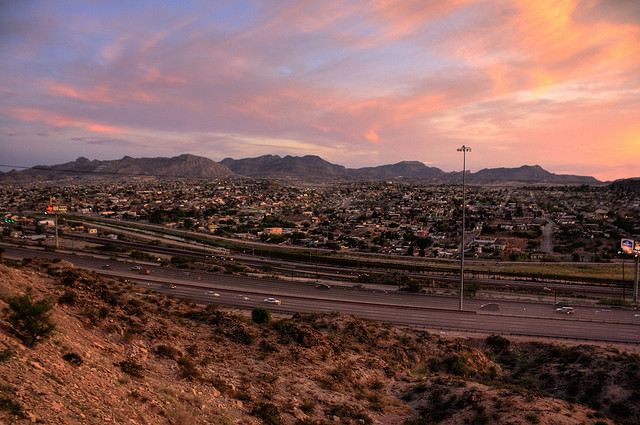
Image: Khowaga1 @ Flickr.
This post was corrected on Aug. 29, 2011. An earlier version erroneously cited the year of the report “Mexico — Profile of Asylum Claims and Country conditions” as 2007, rather than 1997.
About Raisa Camargo
Raisa Camargo studies at the University of Central Florida in Orlando, where she is pursuing a double major in comparative international relations and minoring in French. Raisa grew up in New York City, Queens, with Colombian parents. As an intern reporter at Hispanic Link News Service in Washington, she is focusing on issues that affect the Hispanic community, with particular emphasis on immigration and the Western Hemisphere.
You Might Also Like

20 Comments
As a retired US Border Patrol/INS/ICE agent, I have worked within and witnessed America’s failed immigration system for over 35 years.
Professor James Petras’ explained to me what I sensed yet could not put my finger on during all those years.
http://petras.lahaine.org/?p=1855
Politicians from both sides of the border place the elite’s greed above human life and welfare of both countries’ citizens.
I support mass Mexican drug war exodus and mass asylum as not only protection for human live, but also as a protest against the US backed drug war in Mexico.
Both countries’ governments must be brought to their senses.
http://twopesos-protestfortheundocumented.blogspot.com/2011_03_01_archive.html
[…] Mexico’s Drug War Refugees Rarely Secure Asylum In United States […]
they dont need assylum all they have to do is come over and live the high life while working americans pay for everything
I have never understood the reasoning behind spending billions or trillions of our dollars in countries that would do us harm if the opportunity arose. These are the same countries where we are sending our kids to get killed or wind up with some sort of mental disability. But we can not spend whatever is necessary to help our neighbor to the south get rid of all these cartels and the problems they are causing not only to Mexico but the U.S. as well. People in some of the countries mentioned would rather see any one of us dead–people in our neighboring country are giving up their lives for a chance to live in this country. And our President, the guy who asked for our vote in the last election, seems to be doing nothing to promote some sort of advancement in the quest for immigration reform.
Another case of Mexican entitlement in our country. Remind me why we owe them again???
I think we have given enough to these expats who as a group do not even like our country, rather only what we can do for them.
I live around a lot of hispanics that work hard in our country, but they would not every say anything good about us and they continue to pledge thier loyalty to Mexico.
I suppose there is a good reason for putting up with this anti American sentiment, but I just can’t recall what it is..
[…] More than 230,000 people have been displaced by Mexico’s drug war, about half whom are seeking refuge in the United States. Yet the U.S. government approves very few Mexican asylum applications. Raisa Camargo explores why in this report from El Paso. […]
[…] https://latindispatch.com/2011/08/25/mexicos-drug-war-refugees-rarely-secure-asylum-in-united-states/… […]
[…] Source: Latin American News Dispatch […]
Thank you! Both the article and J. Randolph’s comment make excellent sense. It does me good to see clear understanding and compassion in one place — *this* is the country I want to be from!
I would add that, so far as I can see, a necessary piece of the solution is for the U.S. to take responsibility for the demand for drugs, and the need for adequate addiction treatment, in our own society. Cutting spending on this has been a very false economy.
We lost the America, now we can just watch our country get pulled down by an obsolete (failed) culture, it will catch up to everyone eventually. Time to immigrate.
[…] More than 230,000 people have been displaced by Mexico’s drug war, about half whom are seeking refuge in the United States. Yet the U.S. government approves very few Mexican asylum applications. Raisa Camargo explores why in this report from El Paso. […]
[…] More than 230,000 people have been displaced by Mexico’s drug war, about half whom are seeking refuge in the United States. Yet the U.S. government approves very few Mexican asylum applications. Raisa Camargo explores why in this report from El Paso. […]
[…] More than 230,000 people have been displaced by Mexico’s drug war, about half whom are seeking refuge in the United States. Yet the U.S. government approves very few Mexican asylum applications. Raisa Camargo explores why in this report from El Paso. […]
We are a bunch of volunteers and starting a brand new scheme in our community. Your website offered us with helpful information to work on. You’ve done a formidable job and our entire neighborhood will probably be grateful to you.
The author of this piece fails to mention one CRITICAL part of U.S. asylum law: the alleged persecution must come from the GOVERNMENT.
In each of these instances, the persecution is coming from a drug cartel or a corrupted police force. In none of the instances is the order to persecute coming from the Government of Mexico. For the U.S. government to acknowledge a case of asylum under these facts, the U.S. must necessarily acknowledge that the Mexican government is a government engaged in persecution against its own people. That has huge implications. You can’t have a valid asylum case without this acknowledgement.
So: Is the Government of Mexico a human rights abuser? Are they a persecuting regime? If so, it would seem time to end all foreign aid and also seal the border.
[…] we rightly exercise sympathy for refugees escaping to Turkey when we deny asylum to Latin American refugees fleeing the carnage of our own drug […]
[…] Latin America News Dispatch […]
[…] refuge from poverty and violence in their home countries. That’s to say nothing of the thousands of Mexicans applying for asylum to escape the country’s drug war or the millions of others simply looking for work.Americans […]
[…] seeking refuge from poverty and violence in their home countries. That’s to say nothing of the thousands of Mexicans applying for asylum to escape the country’s drug war or the millions of others simply looking for work.Americans are […]
[…] seeking refuge from poverty and violence in their home countries. That’s to say nothing of the thousands of Mexicans applying for asylum to escape the country’s drug war or the millions of others simply looking for work.Americans are […]
Comments are closed.