Investment Climate In Cuba Still Unfavorable to U.S., Experts Say

March 31, 2010 7:01 am 1 comment
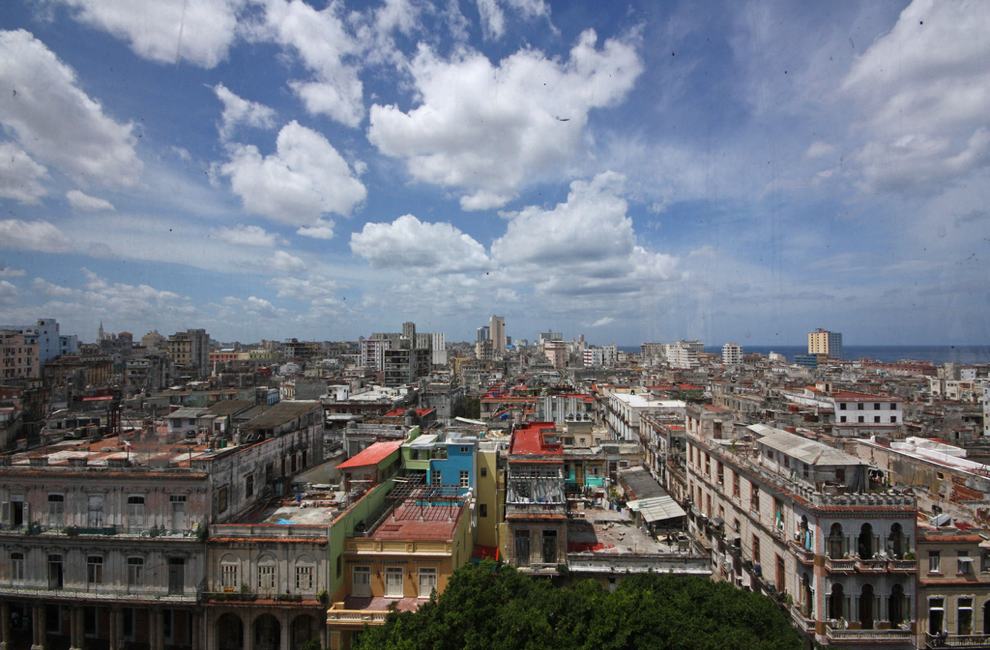
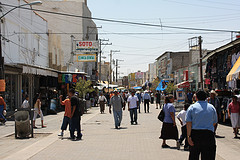
Havana, Cuba.

Havana, Cuba.

NEW YORK — The climate for U.S. investment in Cuba remains adverse and probably won’t improve much in the near future, a group of Cuba experts representing the private sector said at a panel on Tuesday.

The meeting was organized by the New York-based Americas Society, which together with the Council of the Americas has run a working group to examine investment opportunities in Cuba for the last year and a half. The object of the meeting was to identify areas where U.S. companies could position themselves for the moment when trade relations with Cuba, frozen for the last sixty years, finally thaw.

Their assessment was not optimistic.

“Cuba has persistently ranked as one of the worst business environments in the world,” said Maria Werlau, a consultant who specializes in Cuban affairs.

Werlau said that Cuba’s economy is “in shambles,” suffers from high external debt, and its investment rules do not compare favorably with other countries in the region because the government requires foreign companies to partner with a Cuban state enterprise which retains 51 percent ownership. Foreign companies cannot hire Cuban workers directly and Cuban wages are not competetive for the region, she added.

Anna Szterenfeld, Latin America editor for The Economist Intelligence Unit (E.I.U.), offered a similar assessment. The E.I.U. ranks 82 countries according to the attractiveness of their business environment. Cuba’s place: 79th, the lowest in Latin America.

Szternfeld explained Cuba’s low ranking as the result of the dominant position of the state. The majority of areas of potential investment are guarded by Cuba’s revolutionary government, which views foreign direct investment as a threat to its sovereignty. The Cuban government probably will not permit much expansion of private enterprise, domestic or foreign, within the next five years, according to Szternfeld.

Foreign investors don’t just face obstacles erected by the Cuban government — they also must contend with the U.S. trade embargo. Juan Belt, director of the consulting firm Chemonics International, highlighted two areas in particular where U.S. trade restrictions prevent American companies from investing in Cuba: oil and telecommunications.

The U.S. Geological Survey estimated in 2004 that 4.6 billion barrels of undiscovered oil lay off Cuba’s northern coast. “Cuba has a more favorable investment climate for oil exploration” than many countries in Latin America, “and obviously much better than Mexico, where you cannot do exploration,” Belt said. “American oil companies are very interested.”

Belt said that telecommunications offers another key area of potential investment to U.S. companies, because the Cuban market is so underdeveloped, having less cellular phones than Haiti.

He said that when working for the U.S. Agency for International Devlopment in post-conflict areas, he saw that the easiest sector to bring foreign investment into was telecommunications. “When the bullets were still flying in Afghanistan and Iraq, there were people putting up towers, and right now one the largest private companies in Afghanistan is one of the cell [phone] companies,” Belt said.

The Obama administration authorized U.S. telecommunications companies to donate equipment to the island and establish roaming agreements with Cuban providers in April of 2009, but Christopher Sabatini of the Americas Society said that current rules remain prohibitive. For example, U.S. companies cannot invest in Cuban telecommunications infrastructure.

“Despite the announcement by President Obama in April, and regulations that came out in September, there are various severe restrictions on what U.S. investors can do,” Sabatini said.

The panelists’ pessimism about the future of investment opportunities in Cuba highlighted the lack of change in economic relations between the U.S. and Cuba that has taken place under the Obama adminstration.

U.S.-Cuba relations have improved somewhat since hitting a low point during the George W. Bush administration, which tightened travel restrictions for Cuban Americans and began enforcing long-ignored laws prohibiting the U.S. dollar from being circulated in Cuba.

But the Obama administration has maintained the U.S. policy of conditioning a relaxation of the trade embargo on Cuba’s release of political prisoners and liberalization of the political system. The Cuban government, which views the political prisoners as mercenaries supported by Washington, demands the unilateral end of the embargo. Consequently, trade relations are at a standstill for the time being.

Stephen Sokol, a researcher with Columbia University who has studied Cuba, said the meeting was “successful,” but added that Cuba-watchers have been talking about the country’s economic stagnation and lack of investment opportunities since the 1990s.

“There is a lot of Groundhog day about this,” Sokol said.

Image: Neiljs @ Flickr.

1 Comment

  • Cuba has much to learn about conducting business , including that it is not possible to prosper economically with the iron fist of totalitarian control it exercises.

Leave a Reply


Other News

  • Brazil News Briefs Southern Cone Brazil’s Truth Commission Set To Begin Its Work

    Brazil’s Truth Commission Set To Begin Its Work

    Brazilian President Dilma Rousseff will preside over an official ceremony Wednesday to launch Brazil’s Truth Commission. The seven-member commission will convene for two years to investigate human rights abuses committed in Brazil between 1946-1988, focusing on the country’s 1964-1985 military dictatorship. Rousseff, who endured torture as a political prisoner during the dictatorship, has made it clear that she intends to present the Truth Commission as a multi-partisan effort with broad support in Congress and across social sectors. The commission was created after [...]

    Read more →
  • Andes Colombia Today in Latin America Bombing In Bogotá Kills Two, Injures Dozens More

    Bombing In Bogotá Kills Two, Injures Dozens More

    Top Story –  A driver and a police bodyguard for former Colombian Interior Minister Fernando Londoño were killed after a bomb went off in Bogotá on Tuesday, injuring dozens of other people. Lodoño was traveling through a commercial district when an assailant allegedly threw a bomb at his car, according to security camera footage mentioned by Bogotá Mayor Gustavo Petro. Colombian authorities had discovered another bomb earlier Tuesday, hidden in a car allegedly destined for police headquarters in Bogotá, but they managed [...]

    Read more →
  • Caribbean Cuba Today in Latin America Judge Rejects Declassification Of CIA Volume On Bay of Pigs

    Judge Rejects Declassification Of CIA Volume On Bay of Pigs

    Top Story – A U.S. federal judge rejected an effort by the National Security Archive to declassify the CIA’s fifth and final volume on the history of the U.S. Bay of Pigs invasion of Cuba. The volume, the last in the CIA’s Official History of the Bay of Pigs, was written over three decades ago and details the CIA’s internal investigation of the failed Bay of Pigs operation in April 1961, in which the U.S. unsuccessfully attempted to overthrow Fidel Castro’s government in Cuba. Judge Gladys Kessler [...]

    Read more →
  • Andes Colombia Today in Latin America Colombia: FARC Plans To Release French Journalist

    Colombia: FARC Plans To Release French Journalist

    Top Story — Red Cross officials said Sunday that the Revolutionary Armed Forces of Colombia (FARC) guerrillas have agreed to release French journalist Romeo Langlois, who was captured by the rebels while he was embedded with Colombian troops on April 28. The soldiers were in the process of destroying cocaine laboratories in southern Colombia when they were confronted by the rebels, who reportedly killed four members of the Colombian security forces. The head of the ICRC in Colombia said the Red [...]

    Read more →
  • Chile Southern Cone Today in Latin America Chilean Congress Approves “Zamudio Law” Against Discrimination

    Chilean Congress Approves “Zamudio Law” Against Discrimination

    Top Story – Chile’s Congress passed a long-delayed anti-discrimination law on Wednesday night in a vote of 25-3, seven years after the law was initially introduced and more than two months after 24 year-old gay Chilean Daniel Zamudio was beaten in a violent attack from which he eventually died. Zamudio’s murder prompted thousands of Chileans, including Chilean President Sebastián Piñera, to call for expedited passage of the anti-discrimination law that had been languishing since it was approved by the Senate in [...]

    Read more →
  • Central America Honduras Today in Latin America Honduras: Second Journalist Kidnapped in One Week

    Honduras: Second Journalist Kidnapped in One Week

    Top Story — Honduran radio journalist Angel Alfredo Villatoro was kidnapped Wednesday just a few days after authorities discovered the body of another journalist, Erick Martínez, on the side of a road in eastern Honduras. Witnesses of the kidnapping reported that Villatoro was taken by “young gang members” at dawn on his way to work at HRN radio station in Tegucigalpa. The Honduran government and HRN colleagues have issued statements pleading that Villatoro’s captors release him unharmed. Meanwhile, little information has emerged [...]

    Read more →
  • Caribbean Puerto Rico Today in Latin America Puerto Rico Governor: Students Should Speak Fluent English by 2022

    Puerto Rico Governor: Students Should Speak Fluent English by 2022

    Top Story – Puerto Rican Governor Luis Fortuño has proposed an ambitious plan to make Puerto Ricans bilingual in English and Spanish by the year 2022, an effort that he hopes will pave the way for U.S. statehood. Fortuño wants public schools to teach all classes in English, with the exception of Spanish literature and grammar instruction. English is currently taught from kindergarten through high school, but Education Secretary Edwin Moreno said the government would begin to introduce a new bilingual curriculum  at 31 [...]

    Read more →
  • Andes Colombia Today in Latin America Colombia May Regulate Prostitution Following Scandal

    Colombia May Regulate Prostitution Following Scandal

    Top Story – Colombian politicians have proposed a new bill that would regulate prostitution in Colombia, reacting to the scandal that erupted in Cartagena last month when members of the U.S. Secret Service reportedly hired prostitutes before the Summit of the Americas. Conservative Senator Armando Benedetti proposed the bill on Monday, noting that prostitution would remain legal in Colombia, but that the new law would “guarantee labor rights and public health”. It’s not clear whether the bill would pass, but Colombia’s Catholic church remains [...]

    Read more →
  • Argentina Southern Cone Today in Latin America Argentine Ad For London Olympics Angers IOC

    Argentine Ad For London Olympics Angers IOC

    Top Story – The International Olympic Committee (IOC) sent a letter to the Argentine Olympic committee after an Argentine ad promoting the 2012 London Olympics made a controversial reference the Falkland Islands. The ad, which first aired in Argentina on Wednesday, showed scenes of Argentine field hockey captain Fernando Zylberberg training in the Falkland Islands, followed by the statement, ”To compete on British soil, we train on Argentine soil.” Argentina and Britain recently marked the 30th anniversary of the Falklands War, and both countries still [...]

    Read more →
  • Caribbean Cuba Today in Latin America IKEA Used Cuban Dissidents to Manufacture Furniture: Report

    IKEA Used Cuban Dissidents to Manufacture Furniture: Report

    Top Story — Already in deep water over allegations that it used prisoners from the former East Germany to make its products, Swedish home furnishing giant IKEA now faces charges that it employed Cuban dissidents as well. According to the German newspaper Frankfurter Allgemeine Zeitung (FAZ), former Stasi secret police files revealed that IKEA struck a deal with the Castro government in 1987 after an East German trade mission went to Havana for talks with the Cuban interior ministry. The Stasi files [...]

    Read more →